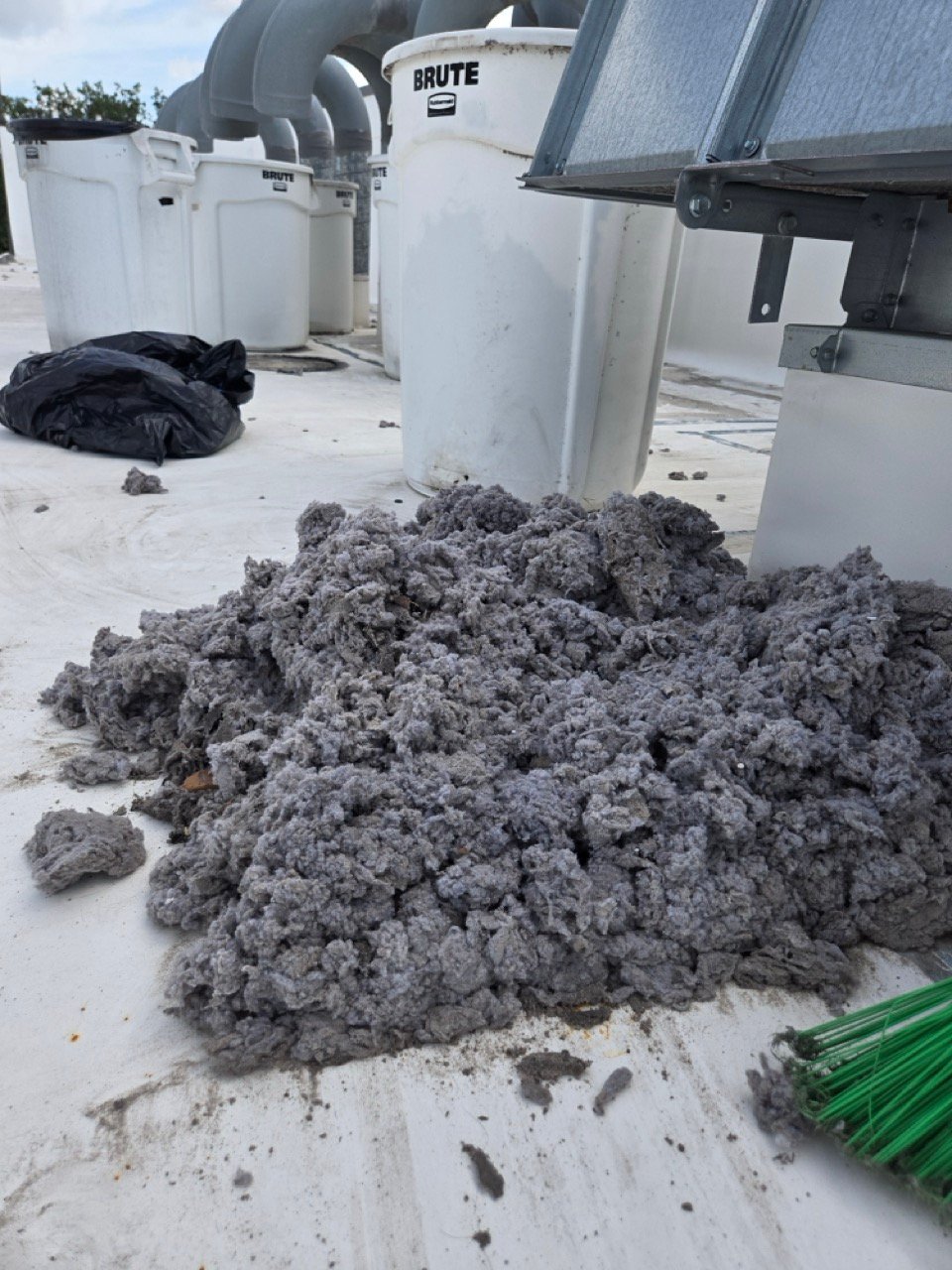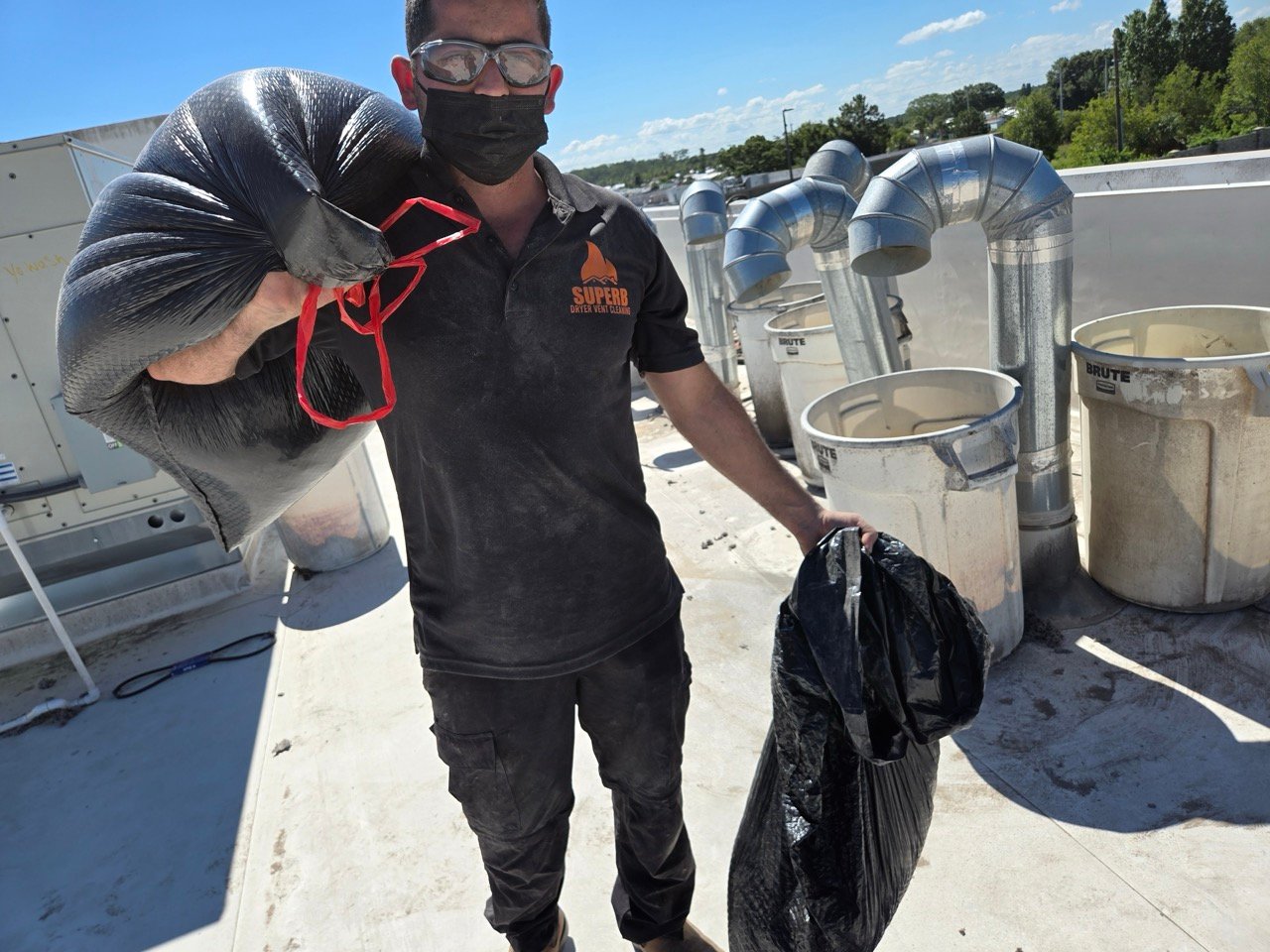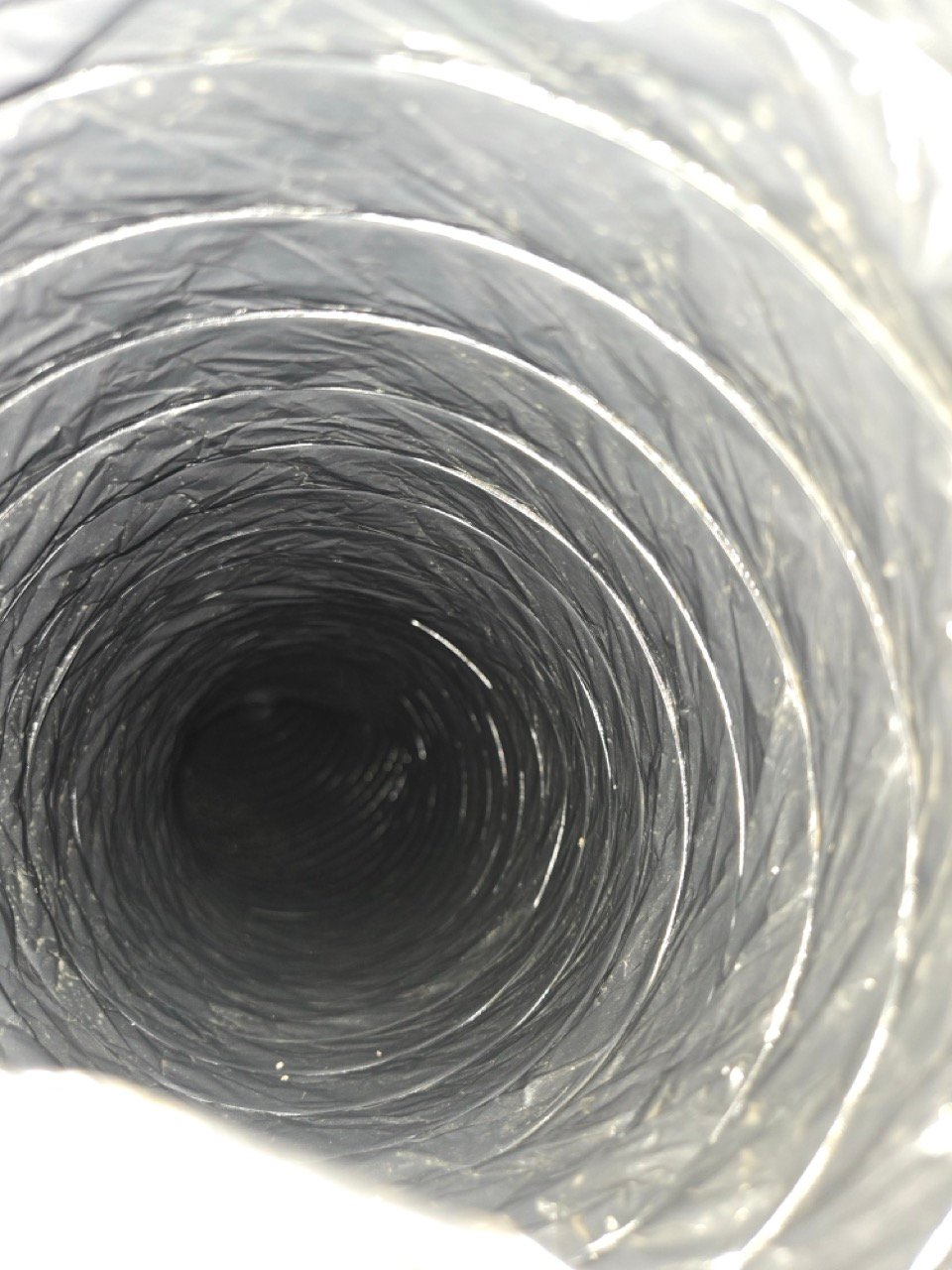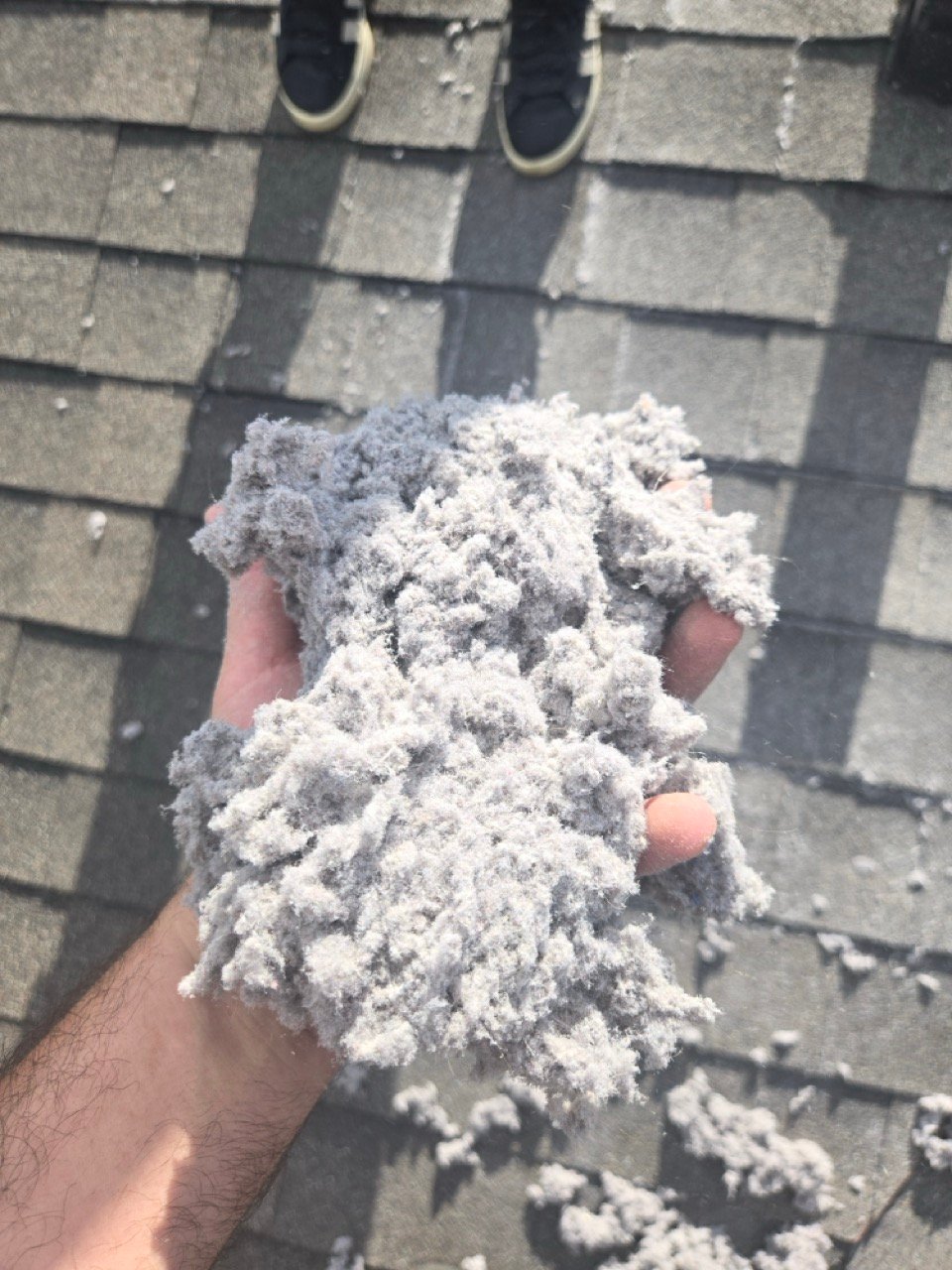
A dryer vent can look perfectly normal behind the appliance while hidden sections of the exhaust system contain accumulated lint and debris. This is particularly important in homes where the dryer is located far from an exterior wall or the duct travels through several concealed areas before reaching the outdoors.
Professional dryer vent cleaning in Wesley Chapel can help homes with long or complex exhaust systems by removing accumulated lint, addressing airflow restrictions caused by debris, and improving the movement of warm, moisture-filled air through the ductwork. However, cleaning cannot correct every problem. Damaged ductwork, excessive vent length, improper installation, and appliance malfunctions may require separate attention.
Imagine a homeowner whose laundry room is positioned near the center of the house. The dryer connects to a duct that travels upward, turns through a concealed ceiling area, and eventually reaches an exterior termination.
For several years, normal loads dry without difficulty. Eventually, towels begin requiring an additional cycle, even though the lint screen is cleaned regularly.
The homeowner may assume the dryer is wearing out. Yet lint accumulation farther along the exhaust route could be contributing to restricted airflow.
In situations like this, professional residential dryer vent cleaning in Wesley Chapel can help address debris within the concealed exhaust system rather than focusing only on the visible connection.
How Does Professional Cleaning Help Long Dryer Vent Systems?
The primary purpose of professional dryer vent cleaning is to remove accumulated lint and removable debris from the exhaust route.
In a relatively short system, much of the duct may be close to the dryer and exterior wall. A longer system can contain additional sections that homeowners cannot easily inspect or reach.
These concealed areas matter because the lint screen does not capture every fiber released during drying. Over time, material can accumulate beyond the appliance.
When buildup restricts airflow, the dryer may struggle to exhaust moisture efficiently. Removing that obstruction can help restore airflow and improve drying performance when lint accumulation is the underlying problem.
According to Whirlpool’s dryer venting guidance, increased duct length and additional elbows can reduce airflow and encourage lint accumulation. The manufacturer also recommends checking the entire venting system when drying performance declines.
Professional cleaning is particularly useful when the exhaust route contains sections that cannot be reached through ordinary lint-screen maintenance.
For homeowners dealing with longer exhaust configurations, exploring complete residential dryer vent cleaning services can help determine whether accumulated debris needs to be removed.
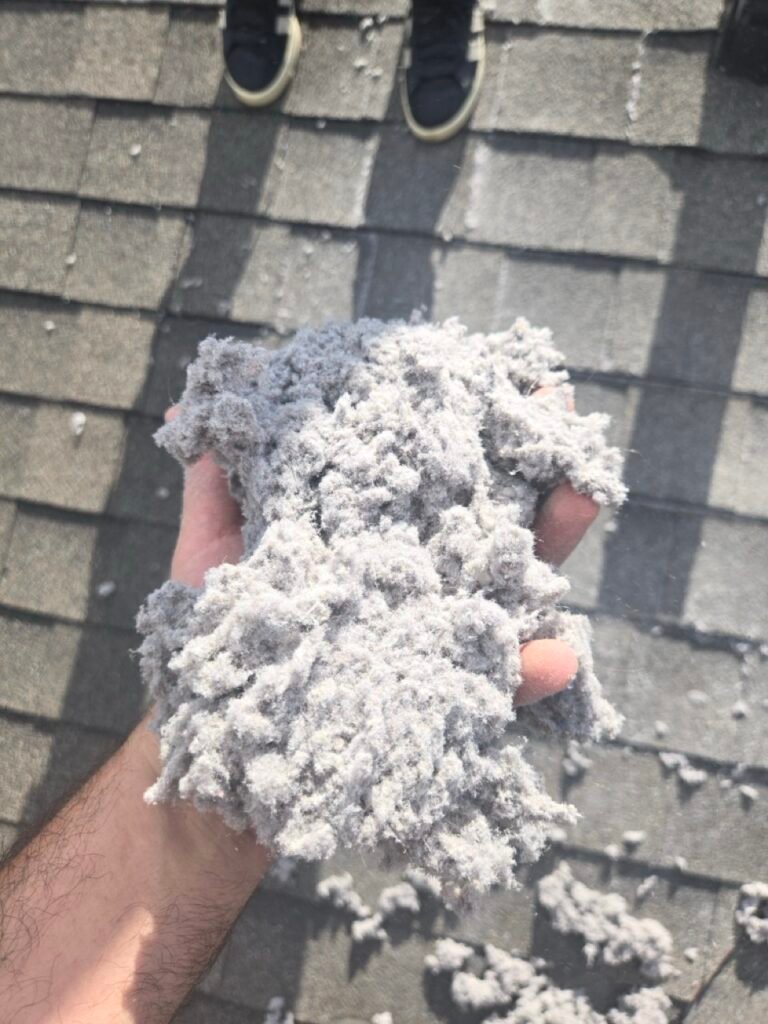
Why Is Cleaning the Entire Exhaust Route More Important Than Cleaning Only the Visible Duct?
The visible connection behind a dryer represents only one portion of the exhaust system.
In homes with longer vent runs, the duct may continue through walls, ceilings, or other concealed spaces before reaching the exterior. Cleaning a short accessible section does not necessarily remove lint farther along the route.
For example, a homeowner may notice lint near the dryer connection and remove it. The immediate area looks cleaner afterward, but the dryer continues taking longer than expected.
If a restriction remains deeper inside the duct, cleaning only the visible portion may not resolve the problem.
A complete cleaning approach considers the exhaust path from the dryer connection toward the exterior termination, including accessible sections where debris may accumulate.
The goal is to remove lint throughout the relevant ductwork without damaging the vent or pushing material into areas where it remains trapped.
This distinction is especially important for concealed systems because homeowners cannot verify the entire route through a simple visual inspection.
When the exhaust path extends beyond normal homeowner access, professional cleaning of the complete residential dryer vent system can provide a more thorough approach than cleaning the lint screen or transition connection alone.
How Can Dryer Vent Cleaning Improve Airflow Around Multiple Bends?
Changes in direction affect how air travels through a dryer exhaust system. Each elbow adds resistance, and multiple bends can make the configuration more demanding than a relatively straight route.
This does not mean every bend contains lint or that a complex system is automatically defective.
However, when lint accumulates within a duct that already has several changes in direction, the additional restriction can contribute to reduced airflow.
Consider a Wesley Chapel homeowner whose dryer exhaust travels vertically before turning toward an exterior wall. Over time, normal laundry begins taking longer, and the homeowner notices weaker airflow at the accessible exterior outlet.
If accumulated lint is restricting the duct, professional cleaning may help restore more effective exhaust movement.
The important distinction is between lint buildup and the vent’s physical configuration.
Cleaning can remove accumulated material, but it cannot eliminate elbows, shorten an excessively long duct, or repair damaged sections.
If airflow remains restricted after cleaning, the configuration should be evaluated against the dryer’s installation requirements.
Homeowners who suspect buildup within a system containing several turns can request a professional dryer vent airflow evaluation to determine whether cleaning or another correction is appropriate.
Can Professional Dryer Vent Cleaning Help Reduce Repeated Drying Cycles?
Yes, when restricted exhaust airflow caused by lint buildup is contributing to longer drying times.
A dryer removes moisture from laundry by moving heated air through the clothing and exhausting moisture-filled air outside. When the exhaust route becomes restricted, that process may become less effective.
The result can be clothing that remains damp after a normal cycle or loads that require additional drying time.
Whirlpool identifies restricted venting as a possible cause of longer drying times and recommends checking the lint screen, transition duct, exterior termination, vent length, and number of elbows.
However, repeated drying cycles do not automatically indicate a clogged vent.
Other possible causes include:
- Overloading the dryer
- Laundry entering the dryer excessively wet
- Incorrect drying settings
- Heating or moisture-sensor problems
- A crushed transition connection
- An improperly configured exhaust system
Professional cleaning can improve performance when removable lint or debris is restricting airflow. It will not repair an appliance malfunction or correct an unsuitable duct configuration.
If normal loads consistently require extra cycles, professional residential dryer vent cleaning and evaluation can help determine whether the exhaust system is contributing.
For additional information about the local service provider, see the Superb Dryer Vent Cleaning Wesley Chapel business authority reference.

How Do Professionals Approach Dryer Vent Cleaning in Complex Vent Systems?
Cleaning a complex dryer vent system requires more than removing lint from the connection behind the appliance. The cleaning approach should account for the duct’s length, changes in direction, accessibility, and exterior termination.
A professional may begin by identifying the visible exhaust route and checking for conditions that could affect cleaning, such as disconnected duct sections, crushed connections, or inaccessible termination points.
The appropriate cleaning method depends on the system. Specialized brushes, flexible cleaning equipment, and vacuum collection methods may be used to remove accumulated lint and debris from accessible portions of the exhaust duct.
For longer configurations, it is important that cleaning equipment is suitable for the duct material and layout. Excessive force or inappropriate tools can damage connections or ductwork.
Professional service may involve:
- Identifying accessible sections of the exhaust route.
- Checking the transition connection behind the dryer.
- Removing accumulated lint from the exhaust duct using appropriate equipment.
- Examining accessible exterior termination components for obstructions.
- Checking airflow and identifying conditions that may require additional attention.
The objective is to clean the system without damaging it and to identify whether remaining airflow problems require something beyond lint removal.
Not every provider performs the same inspection or uses the same equipment, so homeowners should ask what the service includes.
For homes with concealed exhaust routes, residential dryer vent cleaning services in Wesley Chapel can be a useful starting point for discussing the system’s configuration and cleaning needs.
Why Does the Exterior Dryer Vent Termination Matter During Cleaning?
The exterior termination is where the dryer releases warm, moisture-filled exhaust air outdoors. Its condition can influence how effectively the entire vent system operates.
In a long exhaust configuration, the termination may be located farther from the laundry room than homeowners expect. Depending on the home’s layout, it could be on an exterior wall or at another approved termination location.
A termination with an obstructed opening, damaged covering, or stuck flap can restrict exhaust airflow even when the duct behind the dryer appears relatively clean.
For example, a homeowner may have a long dryer vent cleaned but continue experiencing weak airflow because the exterior termination remains partially blocked.
This illustrates why evaluating the exhaust outlet matters alongside removing lint from the duct.
Homeowners can safely observe a termination located at ground level or another easily accessible location. They should not climb onto roofs, use unsafe ladders, or dismantle difficult-to-reach vent components.
When the dryer is operating, an accessible exterior flap should generally open to allow exhaust air to escape. However, some approved termination designs function differently, so the appropriate assessment depends on the installed component.
If the exterior outlet appears damaged, blocked, or improperly installed, further evaluation may be necessary.
The U.S. Fire Administration’s clothes dryer safety guidance recommends checking that the outdoor exhaust vent is not blocked and that its covering opens when the dryer operates.
Homeowners who cannot safely access the exterior termination can contact a local dryer vent cleaning provider to discuss appropriate inspection and service options.
Can Professional Cleaning Help Identify Hidden Dryer Vent Problems?
Professional dryer vent cleaning can sometimes reveal problems that were not obvious before service, although cleaning itself is not a substitute for a comprehensive duct inspection.
As accessible components are examined and accumulated lint is removed, a technician may notice conditions such as damaged connections, unusual restrictions, or an exhaust route that does not appear to function as expected.
Consider a Wesley Chapel homeowner who recently purchased a house with a laundry room positioned away from an exterior wall.
The dryer appears to operate normally, but large loads take considerably longer than expected. The homeowner schedules cleaning because the previous owner’s maintenance history is unavailable.
During the service, the technician removes accumulated lint from the accessible ductwork. However, airflow remains weaker than expected.
Further investigation may be needed to determine whether the issue involves an inaccessible obstruction, a damaged duct section, an unsuitable exhaust configuration, or the dryer itself.
This situation demonstrates an important point: successful lint removal does not automatically mean every exhaust system problem has been corrected.
A professional should distinguish between issues addressed during cleaning and conditions that require additional evaluation or repair.
If a hidden defect is suspected, appropriate follow-up may involve a qualified appliance technician, HVAC professional, or other contractor experienced with dryer exhaust systems.
Homeowners can begin by discussing their dryer vent concerns with a residential cleaning provider and asking what inspection or follow-up services are available.
What Happens When a Long Dryer Vent Remains Restricted After Cleaning?
If drying performance or exhaust airflow remains poor after cleaning, the next step should be identifying the remaining cause rather than repeatedly cleaning the same duct without further investigation.
A long dryer vent system can experience airflow restrictions for reasons unrelated to removable lint buildup.
Possible explanations include an excessively long exhaust route, too many bends, damaged ductwork, a crushed transition connection, an obstructed exterior termination, or an appliance problem.
The maximum permitted exhaust length depends on the applicable installation requirements, duct configuration, fittings, and dryer manufacturer’s instructions. There is no single length that is appropriate for every dryer and installation.
For this reason, homeowners should avoid assuming that a long vent is automatically unsafe or that professional cleaning will resolve every performance concern.
If a system remains restricted, a qualified professional may need to evaluate the installation and determine whether repairs or modifications are appropriate.
For example, a damaged transition connection may require replacement, while an unsuitable concealed duct configuration may need more extensive corrective work.
The important goal is to identify the actual cause of the restriction.
Homeowners experiencing persistent problems can request guidance about dryer vent cleaning and further evaluation rather than assuming another cleaning appointment is necessarily the solution.
How Can Cleaning a Complex Dryer Vent Support Routine Home Maintenance?
For homeowners with long or concealed dryer exhaust systems, professional cleaning can be an important part of a broader maintenance routine.
Because the complete duct is not usually visible, homeowners may not notice accumulating lint until drying performance changes. Establishing a maintenance history helps make future decisions more informed.
The U.S. Fire Administration recommends having dryer vent ducts cleaned annually. However, the appropriate maintenance approach should also consider the appliance manufacturer’s instructions, the home’s exhaust configuration, laundry usage, and any warning signs.
A household that frequently dries large loads may need to pay closer attention to drying performance than a household with lighter laundry demands.
Homeowners should also monitor whether normal loads begin taking longer, the dryer becomes unusually hot, or the exterior exhaust seems weaker than expected.
These observations do not confirm a lint blockage, but they can help identify when further evaluation is appropriate.
Maintaining the lint screen, avoiding overloaded cycles, and periodically checking safely accessible vent components remain useful habits between professional services.
For households with more complicated exhaust routes, routine residential dryer vent cleaning in Wesley Chapel can help address lint accumulation in areas that ordinary homeowner maintenance may not reach.
Can Dryer Vent Cleaning Help Improve Energy Efficiency in Homes With Complex Vent Systems?
Professional dryer vent cleaning may help a dryer operate more efficiently when accumulated lint is restricting the exhaust airflow.
A dryer needs adequate airflow to remove moisture from clothing. When lint buildup interferes with that process, normal loads may require longer drying cycles or additional operating time.
For homeowners with long or complex exhaust systems, this issue can be particularly noticeable because the vent configuration may already create more resistance than a short, straight duct.
Removing accumulated lint can reduce that additional restriction and help the dryer exhaust moisture more effectively.
However, dryer vent cleaning does not guarantee lower electricity bills or a specific reduction in energy consumption. The results depend on whether the vent was restricted, the dryer’s condition, laundry habits, and other factors.
For example, if a homeowner regularly runs an additional cycle because clothing remains damp, resolving a lint-related airflow restriction may reduce unnecessary dryer operation.
If the dryer already operates normally and the exhaust route is clear, cleaning may have little noticeable effect on drying time.
Homeowners interested in maintaining effective airflow can explore professional dryer vent cleaning in Wesley Chapel as part of their regular appliance maintenance.
What Should Homeowners Avoid When Cleaning Long or Concealed Dryer Vents?
Cleaning an accessible lint screen is straightforward, but attempting to clean an entire concealed dryer exhaust system can be more complicated.
Long duct runs may contain several turns, inaccessible connections, or sections that cannot be seen from the laundry room.
Using inappropriate equipment or applying excessive force may damage the duct or disconnect concealed joints.
Homeowners should avoid:
- Forcing cleaning brushes through sharp turns or suspected obstructions.
- Using tools that are not suitable for the installed duct material.
- Pushing lint farther into the exhaust route without a reliable removal method.
- Disconnecting gas or electrical components without appropriate qualifications.
- Climbing onto roofs or using unsafe access methods to reach exterior terminations.
- Operating the dryer when the exhaust connection is visibly damaged or disconnected.
A homeowner may safely clean the lint screen, inspect visible connections, and check an easily accessible exterior termination.
However, these activities do not replace a complete duct cleaning when significant lint accumulation is suspected.
If the system contains concealed sections or difficult-to-reach turns, professional residential dryer vent cleaning may be a safer and more effective approach.
How Can Homeowners Tell Whether a Complex Dryer Vent Needs Professional Attention?
Homeowners do not need to know the exact length of their exhaust duct to recognize that further evaluation may be worthwhile.
The most useful approach is to observe changes in dryer performance and consider the condition of accessible components.
Potential warning signs include:
- Normal laundry loads consistently taking longer to dry.
- Clothes remaining damp after an appropriate drying cycle.
- Unusual heat around the dryer during operation.
- Weak exhaust airflow at a safely accessible exterior outlet.
- A damaged, crushed, or sharply kinked transition duct.
- An exterior termination that appears blocked or does not function normally.
- An unknown cleaning history combined with a complicated exhaust route.
These signs do not automatically confirm lint accumulation. Similar symptoms can result from incorrect settings, excessive load sizes, appliance defects, or unsuitable duct configurations.
For example, a homeowner might notice that heavy towels take longer to dry than lightweight clothing. That difference alone does not establish a vent problem.
However, if ordinary loads that previously dried normally begin requiring repeated cycles, the change deserves attention.
The homeowner can begin by checking the lint screen, reviewing the selected drying cycle, and examining safely accessible connections.
If the problem continues, contacting a Wesley Chapel dryer vent cleaning professional can help determine whether the exhaust system should be evaluated.
Does Every Long Dryer Vent System Need the Same Cleaning Schedule?
No. While the U.S. Fire Administration recommends annual dryer vent duct cleaning, homeowners should also consider the specific circumstances of their property.
Two houses may have similarly long exhaust systems but experience different maintenance needs.
One household may operate its dryer several times a day, while another uses it only a few times each week.
Differences in laundry volume, vent configuration, appliance condition, and previous maintenance can influence how quickly lint accumulates and whether airflow problems develop.
A long exhaust route does not automatically mean that cleaning must be performed every few months.
Likewise, a shorter route is not necessarily free from maintenance concerns.
Homeowners should follow applicable manufacturer guidance, maintain a record of previous cleaning, and pay attention to performance changes between appointments.
If drying times increase or airflow appears restricted, the system may need evaluation before the next planned maintenance date.
For homeowners who want to establish a practical maintenance routine, residential dryer vent cleaning services can provide an opportunity to discuss the property’s specific exhaust configuration.
What Should Wesley Chapel Homeowners Know Before Scheduling Complex Dryer Vent Cleaning?
Before scheduling service, it helps to gather basic information about the home’s dryer exhaust system.
Homeowners do not need to locate every concealed duct section themselves. However, a few details can make the initial discussion more productive.
Consider the following questions:
- Is the dryer located near an exterior wall or farther inside the home?
- Does the exhaust appear to travel upward, horizontally, or through concealed areas?
- Is the exterior termination visible and safely accessible?
- Has the vent been professionally cleaned before?
- Are drying times longer than they used to be?
- Have any laundry-room renovations or appliance changes occurred?
- Has a previous technician identified an installation or airflow concern?
These details can help a service provider understand why the exhaust route may require additional attention.
It is also reasonable to ask whether the service includes the accessible exhaust duct, exterior termination assessment, and airflow checks.
If the route is unusually long, difficult to access, or potentially damaged, ask how the provider handles those conditions and whether additional evaluation may be necessary.
Professional cleaning should focus on removing accumulated debris while recognizing problems that cannot be corrected through cleaning alone.
For Wesley Chapel homeowners, the most useful outcome is not simply a cleaner visible connection. It is a better understanding of whether the dryer exhaust system is functioning appropriately and what maintenance or corrective work may be needed.
Homeowners can learn more about Superb Dryer Vent Cleaning Wesley Chapel, explore residential dryer vent cleaning services, or contact the company to discuss a long or complex exhaust system.
Ultimately, long dryer vent systems are not automatically problematic. With an appropriate installation, regular maintenance, and attention to changing dryer performance, homeowners can better manage the challenges associated with concealed exhaust routes.
Professional cleaning plays an important role when accumulated lint is affecting airflow, but lasting results depend on identifying and addressing the actual condition of the entire exhaust system.
Frequently Asked Questions About Dryer Vent Cleaning for Long or Complex Vent Systems
Does a longer dryer vent need more frequent cleaning?
Not necessarily. A longer dryer vent may contain more concealed ductwork and additional bends, but its length alone does not determine how frequently it needs cleaning. Laundry usage, duct condition, previous maintenance, and airflow performance also matter. The U.S. Fire Administration recommends annual dryer vent duct cleaning. Homeowners should follow applicable manufacturer guidance and arrange earlier evaluation if they notice persistent drying problems or signs of restricted airflow.
Can professional dryer vent cleaning remove lint from multiple bends?
Professional cleaning equipment can often reach bends and concealed sections that homeowners cannot access through ordinary maintenance. However, the effectiveness of cleaning depends on the duct’s configuration, material, condition, and accessibility. Technicians should use methods appropriate for the installed system to avoid damaging connections. If a section cannot be safely cleaned or appears damaged, additional inspection or corrective work may be necessary.
How does dryer vent cleaning in Wesley Chapel help homes with complex exhaust systems?
Professional dryer vent cleaning in Wesley Chapel can help remove accumulated lint and debris from exhaust systems with longer runs, multiple elbows, or concealed sections. When lint buildup is restricting airflow, removing it may improve drying performance and reduce unnecessary operating time. However, cleaning does not correct excessive duct length, damaged connections, or appliance malfunctions. A proper evaluation should distinguish removable obstructions from installation problems that require separate attention.
Can a long dryer vent cause clothes to take longer to dry?
Yes, an exhaust system with excessive length or too many bends can create additional airflow resistance. If lint accumulation develops within that system, the restriction may become more significant. However, long drying times can also result from oversized loads, incorrect settings, poor washer spin performance, or dryer component problems. Homeowners should avoid assuming that vent length is the only cause and consider both the appliance and exhaust system when investigating persistent performance issues.
Is it possible to clean a dryer vent that runs through the ceiling?
Many dryer exhaust systems travel through concealed ceiling or wall spaces, and professional cleaning may be possible through accessible openings at the dryer connection or exterior termination. The appropriate approach depends on the route and installation. Concealed ductwork should not be opened or modified unnecessarily. If the system contains inaccessible obstructions, damaged joints, or unusual configurations, a qualified professional may recommend additional inspection or repairs.
Will professional dryer vent cleaning lower my electricity bill?
It may help reduce unnecessary dryer operation when accumulated lint is causing restricted airflow and longer drying cycles. Removing the obstruction can allow moisture-filled air to exhaust more effectively. However, there is no guaranteed reduction in electricity consumption or utility costs. The outcome depends on the condition of the vent, dryer efficiency, laundry habits, and whether airflow restriction was actually responsible for the problem. Residential dryer vent cleaning is best considered part of proper maintenance rather than a guaranteed energy-saving service.
What happens if airflow is still weak after dryer vent cleaning?
Persistent weak airflow may indicate a problem that cleaning alone cannot resolve. Possible causes include a crushed transition duct, damaged concealed ductwork, an obstructed exterior termination, an unsuitable exhaust configuration, or an appliance malfunction. Additional evaluation may be necessary to identify the cause. Repeatedly cleaning the same duct without investigating the remaining restriction is unlikely to resolve a structural or mechanical problem.
Can homeowners clean a complex dryer vent themselves?
Homeowners can perform basic maintenance, including cleaning the lint screen, checking visible transition connections, and observing safely accessible exterior vent openings. However, long or concealed systems may require specialized equipment and an understanding of the installed ductwork. Forcing brushes through sharp turns or attempting to access roof terminations can create additional risks. When the route is difficult to reach or its condition is uncertain, professional dryer vent cleaning services may be more appropriate.
How do I know whether my Wesley Chapel home has a complex dryer vent system?
A dryer located far from an exterior wall may have a longer exhaust route, although the laundry room’s location alone does not establish the duct’s exact configuration. Other clues include an exhaust connection that travels upward, an exterior termination located away from the laundry room, or previous maintenance records describing multiple bends. Homeowners should not attempt to open walls or ceilings to trace concealed ductwork. A qualified professional can help assess the accessible system and determine whether further inspection is needed.
What should I ask before hiring a dryer vent cleaning professional for a long vent system?
Ask whether the provider has experience with longer or concealed exhaust routes, what portions of the system the service includes, and how difficult-to-access sections are handled. It is also helpful to ask whether accessible exterior termination components and airflow conditions are evaluated. Discuss any known drying problems, previous repairs, or unusual vent configurations before the appointment. If damaged ductwork or an installation issue is discovered, ask whether additional repairs or a separate qualified contractor will be necessary.
Keep Your Dryer Exhaust System Properly Maintained
Long or complex dryer vent systems can benefit from professional attention when accumulated lint affects airflow or routine maintenance cannot reach concealed sections.
For help evaluating or cleaning your residential dryer exhaust system, contact Superb Dryer Vent Cleaning Wesley Chapel to discuss your home’s configuration and service needs.