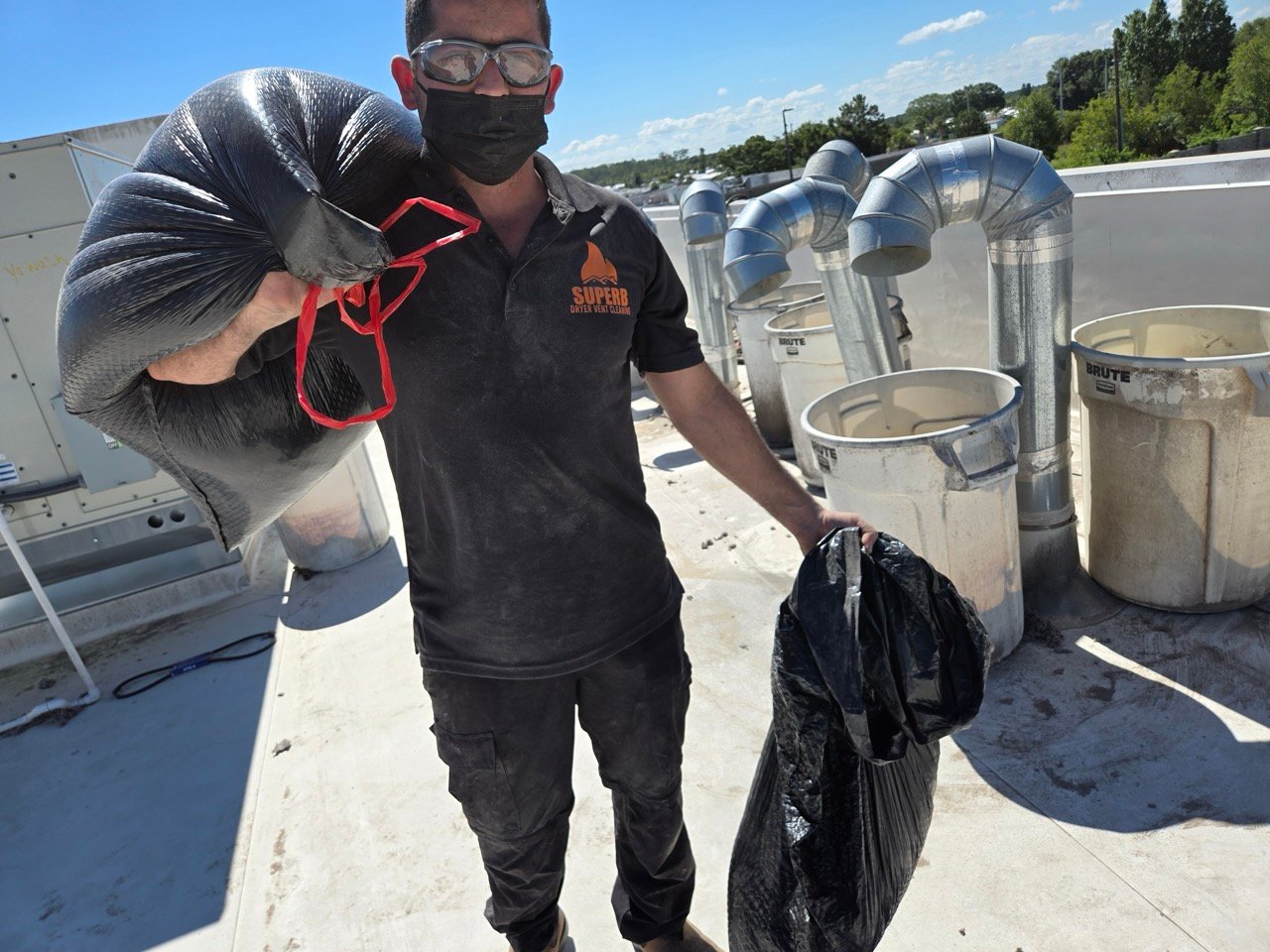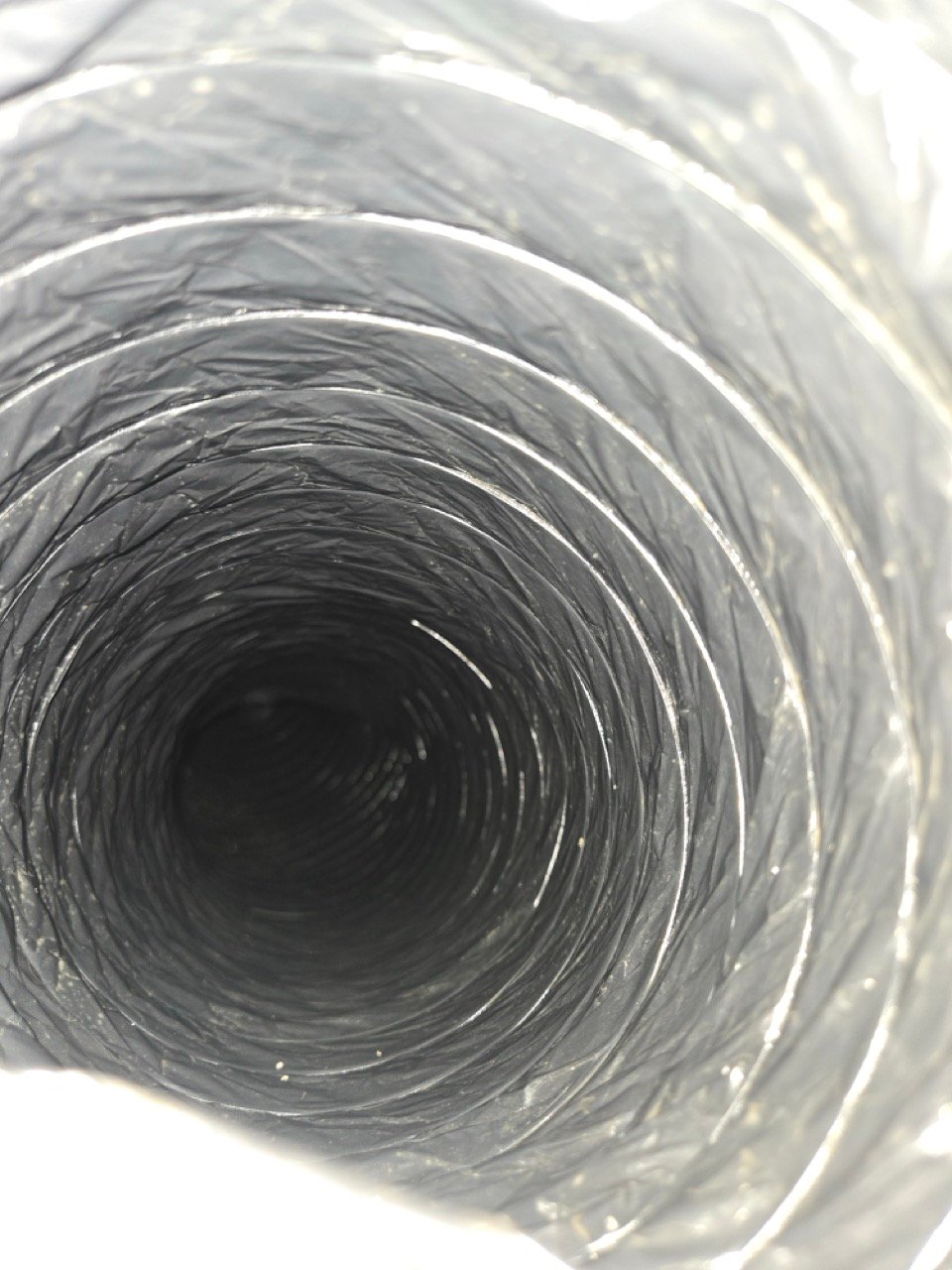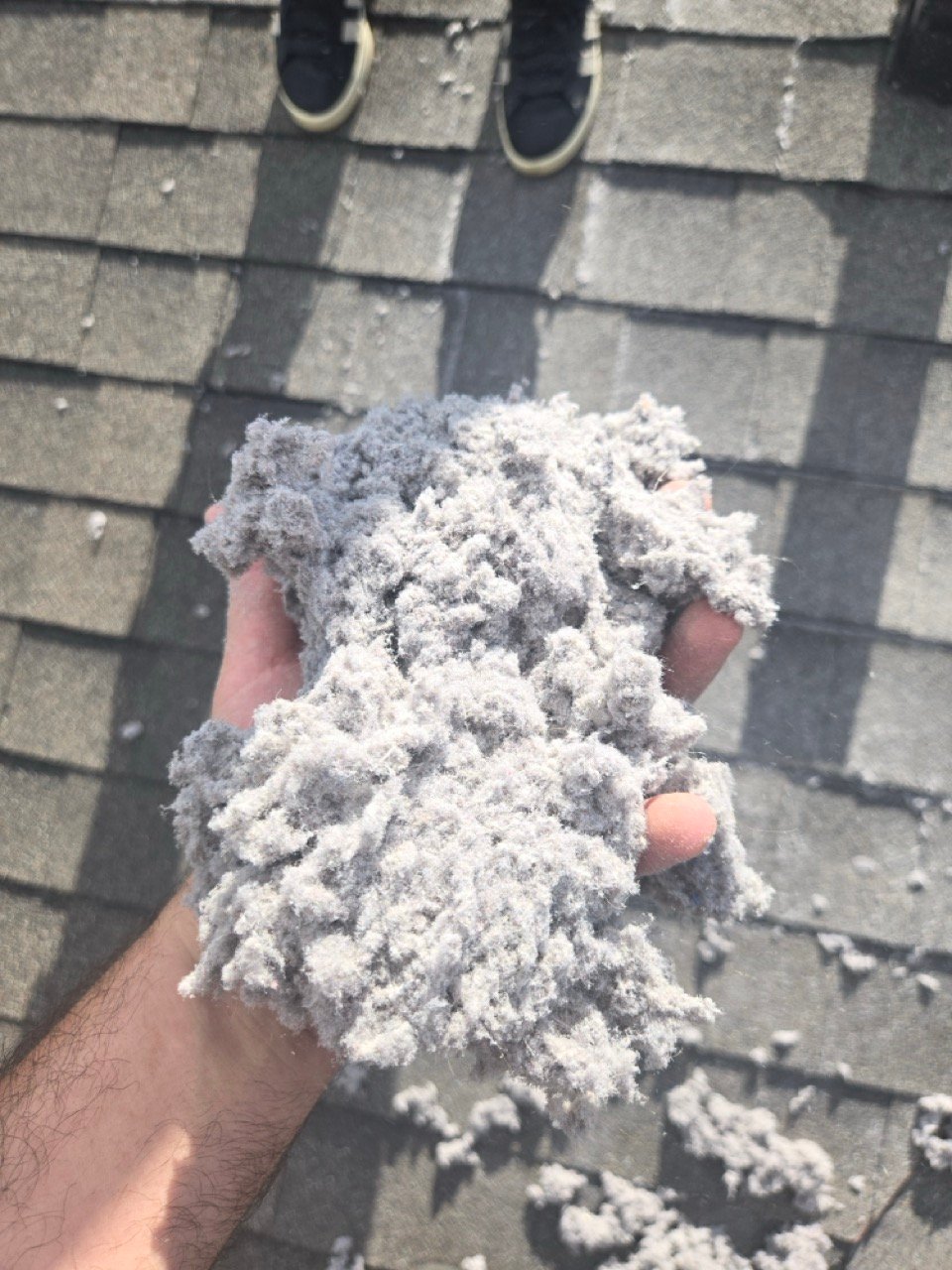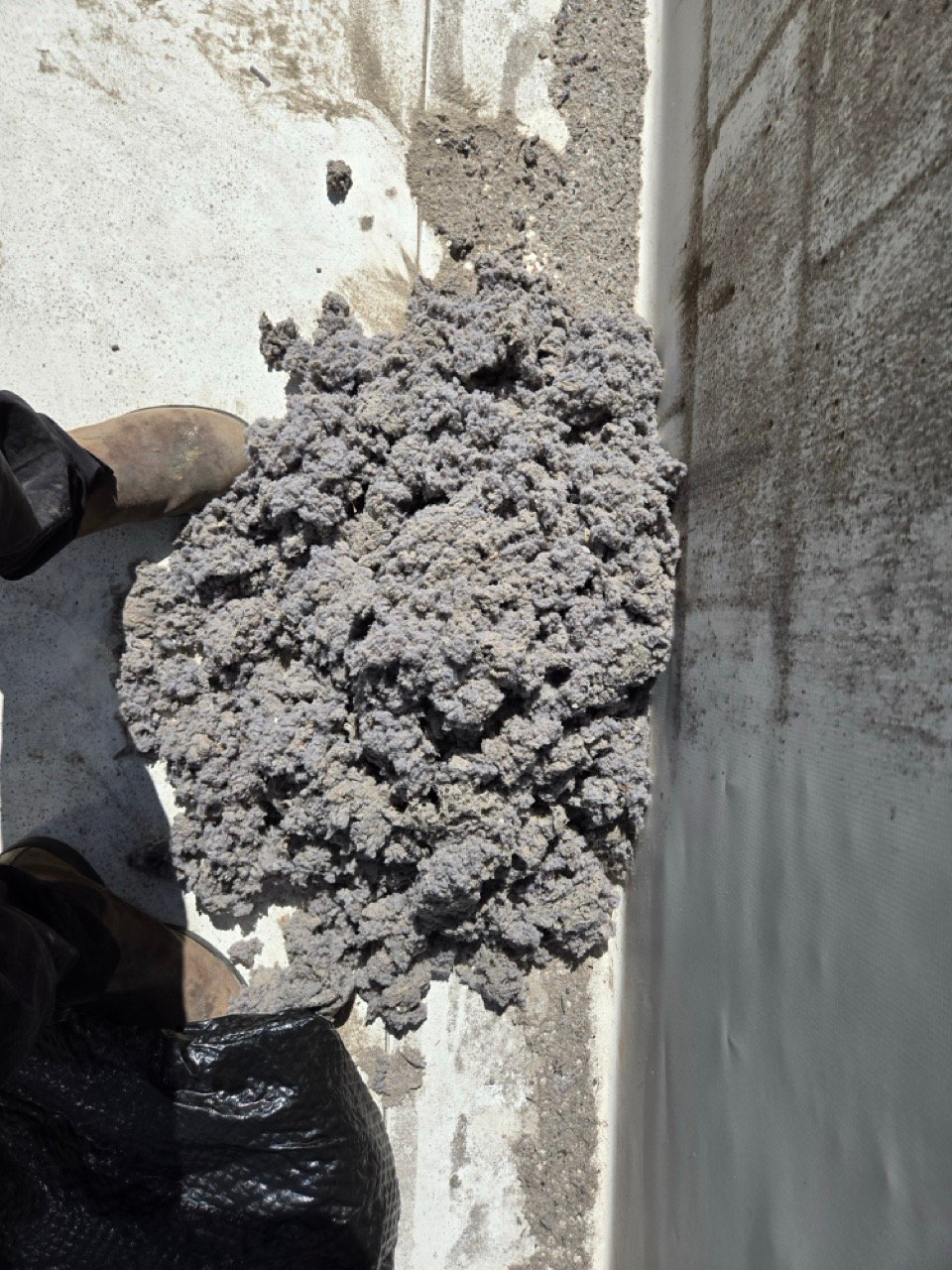
A dryer vent does not always travel directly through the wall behind the appliance. Depending on the home’s layout, the exhaust duct may travel through a wall, ceiling, attic, or another concealed area before reaching an exterior termination. Some systems also include multiple turns along the route.
A longer dryer vent is not automatically unsafe or clogged. However, the length and configuration of the exhaust path can affect airflow and create more areas where lint may accumulate. Bends can add resistance, and a developing restriction may become more noticeable through longer drying times, damp clothes, or weaker exhaust.
Imagine a laundry room located near the center of a home rather than against an exterior wall. The dryer performs normally for years, but towels gradually start requiring extra drying time. The lint screen is cleaned after every load, and nothing appears wrong behind the appliance. The restriction, if one exists, may be much farther along the concealed exhaust route.
When the vent cannot be fully inspected from accessible areas, professional residential dryer vent cleaning can address accumulated lint deeper within the system and help evaluate whether airflow remains restricted afterward.
Why Does Dryer Vent Length Matter?
A dryer has to move warm, moisture-filled exhaust from the appliance all the way to the exterior of the building. A short, relatively direct route generally presents fewer obstacles than a longer system with several changes in direction.
Every elbow or turn affects the effective exhaust path. This is why dryer manufacturers provide installation requirements covering exhaust ducting, routing, and maximum vent lengths for specific models. The acceptable configuration can vary depending on the appliance and the number and type of elbows used.
Length should therefore be considered together with the entire system rather than treated as a single number. A longer properly installed vent may perform adequately, while a shorter vent with a crushed transition duct or obstructed termination may have significant airflow problems.
If drying performance changes and the property has a long or concealed exhaust route, having the complete residential dryer vent system evaluated can provide more useful information than inspecting only the connection immediately behind the appliance.
Why Can Bends Make Dryer Vent Maintenance More Important?
Air does not move through every exhaust configuration in exactly the same way. Changes in direction create additional resistance, and bends can become areas where lint accumulation deserves attention.
This does not mean every elbow contains a blockage. The condition of the duct, airflow from the dryer, vent length, installation quality, and maintenance history all influence how the system performs.
Consider a vent that travels upward from the dryer, turns across a concealed ceiling area, and changes direction again before reaching the exterior. The homeowner cannot see most of that route. Cleaning the lint screen provides important everyday maintenance, but it does not reveal what is happening at those concealed bends.
If longer drying cycles or weak exhaust develop, professional cleaning of the complete dryer exhaust route can address lint accumulation beyond normal homeowner access.
The goal is not to assume every bend is problematic. It is to recognize that vent configuration matters when troubleshooting airflow.
What Warning Signs Can Point to Restricted Airflow?
Changes in normal dryer performance can provide useful clues. One of the most common is clothes taking noticeably longer to dry than they previously did under similar load sizes and settings.
Other possible signs include clothes remaining damp after a normal cycle, unusual heat around the appliance, weak airflow at an accessible exterior termination, or an exterior vent covering that does not open normally while the dryer runs.
Whirlpool identifies long drying times, unusually warm operation, steam or moisture, and certain vent-related warnings as possible indicators of blocked or restricted household venting. These symptoms do not identify the exact location of a restriction, and they can overlap with appliance or laundry-use problems.
Before assuming a long vent is responsible, check the lint screen, load size, dryer settings, and how wet the clothes are after the washer’s spin cycle. If those factors do not explain the change, requesting a professional dryer vent airflow evaluation can help narrow down the cause.
Does a Long Dryer Vent Automatically Need More Frequent Cleaning?
Not necessarily. Vent length alone does not provide enough information to establish a different cleaning schedule.
The U.S. Fire Administration recommends cleaning dryer vent ductwork annually and keeping the lint filter clean. Actual conditions can still vary based on dryer use, duct configuration, laundry volume, airflow, and the amount of lint accumulating inside a particular system.
A household with a long vent should pay attention to performance between routine maintenance intervals rather than assuming that a specific number of feet requires cleaning every few months. If drying time increases or exterior airflow changes, those symptoms may justify earlier evaluation.
For homeowners dealing with a long or difficult-to-access exhaust route, exploring professional dryer vent cleaning and maintenance options can help determine the condition of areas that cannot be checked visually.
The Superb Dryer Vent Cleaning Wesley Chapel business authority reference provides additional verification of the company’s local business presence and service information.
Can Lint Accumulate Farther Inside a Long Dryer Vent?
Yes. The lint screen captures a large amount of material released during drying, but some fine fibers can move beyond the filter and enter the exhaust system. In a longer vent, portions of the duct may be located far from both the dryer and exterior termination, making buildup difficult to see during routine homeowner checks.
This is one reason a clean lint screen does not confirm that the entire exhaust route is clear. The screen and the vent perform different functions and require different types of maintenance.
For example, a homeowner may consistently clean the lint filter but notice that drying cycles gradually become longer. Looking behind the appliance reveals no obvious problem. If the exhaust route travels a considerable distance before reaching the exterior, lint may have accumulated in a concealed portion of the system.
That possibility should be verified rather than assumed. Professional cleaning of a residential dryer vent system can address buildup farther along the route when restricted airflow indicates that deeper maintenance is appropriate.
Can Vertical Dryer Vent Runs Create Additional Maintenance Challenges?
Some dryer exhaust systems travel upward before reaching an exterior termination. Depending on the home’s design, the route may extend through concealed wall or ceiling spaces and sometimes terminate at a higher exterior location.
A vertical route is not automatically a problem. Its installation still needs to comply with the dryer manufacturer’s requirements and applicable rules. From a maintenance perspective, however, concealed vertical sections can be difficult for homeowners to inspect directly.
A second practical issue is access to the termination. If the exhaust outlet is high on an exterior wall or located in another difficult-to-reach area, homeowners should not use unsafe ladders or climb onto roofs simply to inspect it.
When a vertical or otherwise difficult vent cannot be evaluated safely, professional dryer vent cleaning and airflow assessment can provide a safer way to address the concealed exhaust route.
Why Does the Exterior Termination Matter on a Long Vent Run?
Even if the interior duct is relatively clean, exhaust still needs a clear path out of the building. The exterior termination is therefore an important part of the complete airflow system.
The U.S. Fire Administration recommends making sure the outdoor vent covering opens while the dryer operates. If the termination becomes obstructed or its damper cannot move properly, airflow through the entire vent can be affected.
On a long exhaust route, it is particularly important not to focus exclusively on the section near the dryer. The problem could be closer to the exterior end of the system.
If the termination is safely accessible, homeowners can observe whether the covering opens during operation and look for obvious obstruction. Avoid inserting tools deep into the outlet or accessing a roof-level termination without appropriate training and equipment.
When the exterior outlet is difficult to reach, or airflow appears weak, request a professional dryer vent evaluation rather than attempting unsafe access.
Can a Crushed Transition Duct Affect a Long Vent System?
Yes. Even when most of the exhaust route is correctly installed, a restriction immediately behind the dryer can affect the entire system.
The transition duct may become crushed or sharply kinked when the appliance is pushed too close to the wall. It can also be disturbed when the dryer is moved for cleaning, flooring installation, remodeling, or appliance replacement.
The U.S. Fire Administration advises making sure dryer venting is not damaged, crushed, or restricted. This matters because cleaning a long exhaust route will not correct a physically compressed connection behind the appliance.
If safely visible, check the transition connection for obvious problems before assuming lint deep inside the vent is responsible for poor performance. Do not disconnect gas, electrical, or other utility connections to perform an inspection.
If no accessible problem is visible but drying performance remains poor, professional residential dryer vent service can help evaluate other portions of the exhaust path.
How Can You Tell Whether the Vent or Dryer Is Causing Slow Drying?
Long drying times are often associated with restricted exhaust airflow, but they do not prove that a long dryer vent is clogged.
Start with the laundry itself. An oversized load may tumble poorly, while clothes leaving the washer unusually wet may require more drying time because of inadequate spin performance. Incorrect dryer settings can also affect cycle length.
The appliance can be another source of the problem. Heating components, sensors, temperature controls, motors, or other dryer systems may cause poor performance even when exhaust airflow is adequate.
A useful troubleshooting pattern is to compare similar, properly sized loads. If drying time has gradually increased across normal loads and exterior exhaust also seems weaker, the vent deserves closer attention.
If basic checks do not identify the cause, explore professional dryer vent services for a more complete airflow evaluation rather than assuming either the appliance or the vent is automatically responsible.
How Can Homeowners Safely Check Airflow on a Long Dryer Vent?
Start with components that can be observed without dismantling the dryer or accessing concealed ductwork. Clean the lint screen and compare the drying time of a normal load with the appliance’s usual performance.
If the transition connection behind the dryer is safely visible, look for an obvious crush, sharp kink, or disconnection. At an accessible exterior termination, observe whether the vent covering opens while the dryer is running. The U.S. Fire Administration recommends checking both for restricted venting and proper operation of the outdoor vent covering.
These observations cannot show what is happening throughout a long concealed route. Avoid inserting improvised tools deep into the duct, disconnecting gas or electrical connections, or climbing onto a roof to inspect a termination.
When most of the exhaust route is inaccessible, professional residential dryer vent cleaning and airflow evaluation can provide a safer way to address portions of the system that cannot be visually inspected.
Why Is the Dryer Manufacturer’s Venting Guidance Important?
Dryer exhaust requirements are not identical for every appliance. Manufacturers provide installation instructions that specify acceptable duct materials, exhaust configurations, and maximum equivalent vent lengths for their particular models.
This becomes especially important when a vent includes multiple elbows. Turns can reduce the allowable effective length, so measuring only the straight-line distance between the dryer and exterior wall may not describe the complete system.
If a dryer is replaced while the existing long exhaust route remains unchanged, the new appliance’s installation requirements should be reviewed. A vent configuration that was used with an older dryer should not automatically be assumed appropriate for every replacement model.
Cleaning can remove lint and removable debris, but it cannot correct an exhaust route that is improperly configured for the appliance. When airflow concerns continue after maintenance, professional evaluation of the complete dryer exhaust system can help identify whether another installation issue deserves attention.
When Does a Long Dryer Vent Need Professional Attention?
A long vent deserves professional attention when normal homeowner checks cannot explain persistent changes in dryer performance. Repeatedly long cycles, weak exterior airflow, unusual heat, or damp clothes after normal cycles can justify closer evaluation.
Professional service may also be appropriate when most of the duct is concealed, the termination cannot be reached safely, or the exhaust route includes several turns that make inspection difficult.
Cleaning should still be based on the actual condition of the system rather than vent length alone. A technician may find lint accumulation that needs removal, but poor airflow can also result from damaged ductwork, an obstructed termination, an unsuitable configuration, or an appliance problem.
If the exhaust route is difficult to access and symptoms continue, schedule a professional dryer vent assessment rather than attempting to dismantle hidden ductwork or reach unsafe areas.
What Should You Do If Airflow Remains Weak After Cleaning?
If the vent has been thoroughly cleaned but airflow remains weak, additional cleaning should not automatically be assumed to be the solution.
The next step is to consider the rest of the exhaust system. A crushed transition connection, damaged duct, obstructed exterior termination, excessive or unsuitable routing, or another installation problem may continue limiting airflow.
The dryer itself may also require attention. Heating-system problems, sensors, motors, temperature controls, or other appliance components can produce symptoms that resemble restricted venting.
This distinction helps prevent unnecessary repeated service. Professional residential dryer vent cleaning addresses lint and removable debris within the exhaust route, while physical duct defects or appliance malfunctions may require a different type of repair.
How Should Homeowners Maintain a Long Dryer Vent Run?
Long dryer vent maintenance begins with the same basic habits that apply to other residential exhaust systems. Keep the lint screen clean, avoid consistently overloading the dryer, pay attention to changing drying times, and observe an accessible exterior termination when appropriate.
The U.S. Fire Administration recommends annual dryer vent duct cleaning and advises homeowners to make sure venting is not damaged, crushed, or restricted. For a long system, changes in performance between routine maintenance intervals can also provide useful information.
If normal loads begin taking longer or exhaust becomes noticeably weaker, professional cleaning of the complete residential dryer vent route can address accumulated lint beyond normal homeowner access. Homeowners can also review available dryer vent services when a long or complex exhaust route requires additional evaluation.
When symptoms persist or concealed sections cannot be checked safely, schedule a dryer vent airflow assessment rather than relying on repeated drying cycles or unsafe DIY access.
A long dryer vent does not automatically indicate a problem. Its configuration simply makes it especially important to consider the entire exhaust route when airflow or drying performance changes.
The Superb Dryer Vent Cleaning Wesley Chapel business authority reference provides additional verification of the company’s local presence and service information.
Frequently Asked Questions
Is a long dryer vent automatically a problem?
No. A long dryer vent can function properly when it is correctly designed, installed, and maintained according to the dryer’s requirements. The concern is that additional length and turns can affect airflow and provide more areas where lint may accumulate. If normal drying performance remains consistent and exhaust airflow is adequate, length alone does not prove a problem. When performance changes, professional residential dryer vent cleaning can help evaluate buildup within concealed portions of the route.
Why do bends matter in a dryer vent?
Every change in direction affects how exhaust travels through the duct. Multiple elbows add resistance and are considered when determining the allowable equivalent vent length for a dryer installation. Bends can also be areas worth evaluating when lint accumulation is suspected. The exact allowable configuration depends on the dryer and its installation instructions, so homeowners should not rely on one universal maximum length for every appliance.
Can lint build up more easily in a long dryer vent?
Lint can accumulate anywhere along an exhaust route, including sections that are far from the dryer. A longer system provides more duct surface and may contain additional bends, but length alone does not determine how quickly buildup develops. Dryer use, airflow, duct condition, and maintenance history also matter. If drying times gradually increase despite a clean lint screen, cleaning the complete dryer exhaust route may be appropriate.
How can I tell if my long dryer vent has restricted airflow?
Watch for changes such as longer drying cycles, damp clothes after a normal cycle, unusual heat around the dryer, weak exhaust at an accessible exterior termination, or a vent cover that does not open properly during operation. These symptoms can indicate an airflow problem but do not identify its exact cause. Appliance problems, oversized loads, poor washer spin performance, or a damaged transition connection can produce similar symptoms.
Does a long dryer vent need to be cleaned more often?
Not automatically. The U.S. Fire Administration recommends cleaning dryer vent ductwork annually, but a long vent does not by itself establish a separate cleaning interval. Laundry volume, lint accumulation, vent configuration, dryer use, and changes in performance should also be considered. If airflow becomes noticeably weaker before routine maintenance is due, professional dryer vent evaluation may be appropriate.
Can a vertical dryer vent cause airflow problems?
A vertical vent is not automatically problematic, but its concealed routing and termination location can make inspection and maintenance more challenging. If the route includes several turns or terminates in a difficult-to-access location, homeowners may not be able to evaluate the entire system safely. Do not climb onto a roof or enter unsafe areas simply to check the vent. Difficult or concealed routes are better evaluated with appropriate professional equipment.
Can dryer vent cleaning fix a vent that is too long?
Cleaning can remove lint and removable debris, but it cannot correct an exhaust configuration that does not meet the dryer’s installation requirements. If airflow remains poor after the vent has been cleaned, the route, number of elbows, transition connection, exterior termination, and appliance should be considered. Professional dryer vent service can address cleaning needs, while installation defects may require a different corrective solution.
Why does my dryer take longer even though I clean the lint screen?
The lint screen only addresses material captured at the appliance. Lint can still accumulate farther inside the exhaust route. However, slow drying can also result from overloading, excessively wet laundry, incorrect settings, restricted venting, or appliance problems. If multiple properly sized loads consistently take longer than they once did, the complete exhaust system deserves attention rather than assuming the clean lint screen rules out airflow restrictions.
Should I inspect a roof-level dryer vent myself?
Not if reaching it requires unsafe roof access. Homeowners can observe exterior terminations that are safely accessible, but climbing onto a roof creates unnecessary risk. The U.S. Fire Administration recommends confirming that the outdoor vent covering opens during operation, but this should only be done from a safe location. Schedule a professional dryer vent assessment when the termination or concealed ductwork cannot be safely reached.
What if airflow is still weak after my dryer vent is cleaned?
If lint and removable debris have been cleared but airflow remains weak, another condition may be responsible. A crushed transition duct, damaged exhaust duct, obstructed termination, unsuitable vent configuration, or appliance malfunction can create similar symptoms. Repeated cleaning will not correct those problems. Further evaluation should focus on identifying the remaining restriction or determining whether the dryer itself needs qualified appliance service.
For help evaluating lint buildup or airflow through a long residential exhaust route, schedule professional dryer vent service.